
The history of Coleford · Devon
A past worth uncovering.
The stories behind Coleford’s quiet streets are anything but ordinary. A flood, a busy roadside inn, a forge and the coming of the railway each left their mark.
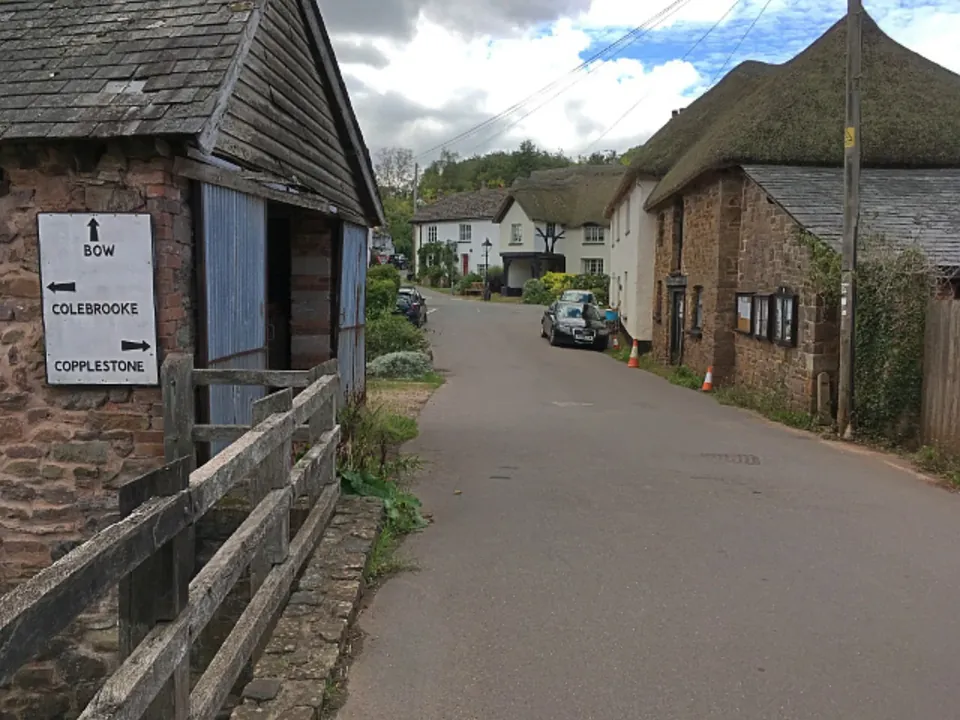
Photograph: Hugh Craddock / Geograph · CC BY-SA 2.0
A crossroads with a purpose
For centuries Coleford served the farms and travellers of its corner of Mid Devon. Houses, small holdings, workshops and inns grew up close together around the road and stream. The settlement belonged to Colebrooke parish, but it developed a recognisable village life of its own.
Directories and nineteenth-century estate records show a place where a blacksmith, wheelwright, innkeeper, butcher and others could earn a living. Some of the buildings still stand, even though their work has changed.
The flood that altered the village
On 29 November 1841, severe flooding swept through Coleford. Contemporary reports described washed-away bridges and destroyed buildings. A local appeal named families affected by the disaster; it was not just a problem for roads, but a threat to homes and livelihoods.
The crossing was subsequently rebuilt and altered. It is a striking reminder that even the most familiar part of a village can be the result of an extraordinary event.
An intriguing glimpse of the flood
When the railway came near
The North Devon Railway brought changes to the eastern side of Coleford in the 1850s. Construction workers found lodgings in the village, including at the Ship Inn, and the railway cutting changed how some nearby land was used.
For a short time, the scale and character of daily life were different. An incident involving a police constable in 1853 offers a glimpse of the tensions that could accompany so many newcomers.
Inns, trades and old buildings
The New Inn has a documented name by 1800, while the former Ship Inn, now associated with Browns Farm, forms another important thread in village history. The blacksmith's shop was recorded in the tithe survey and estate material, and old houses around the crossroads have their own layers of occupation.
What looks like a timeless Devon village is, in fact, a place that has been continually adapted.
Where does the royal tradition fit?
One of the most captivating stories links King Charles I with Coleford during the Civil War. There is documentary evidence for his movement between Crediton and Bow, but the famous tradition of a review of troops from a village porch has not been established by a contemporary account. That distinction is part of what makes the story interesting.
A next chapter, in print
There is far more to discover.
Coleford's old buildings and the people who used them belong to a much wider parish history. These webpages offer an introduction; the published books bring together additional photographs, maps, village stories and the documentary research behind them.